Παρασκευή 6 Μαρτίου 2009

Etymology of topic

Etymology of topic
Topic derives from the Latin topica, which is a tranliteration of the Greek topica (of a place, local, the name of a work by Aristotle; τοπικά) from topos (place, subject for conversation; τόπος)
_
From the same root:
topical, utopia, topography
_
In modern Greek
a) topicos: local, regional [τοπικός]
b) topos: place, country, position, locus [τόπος]
c) topio: landscape, seascape, scenery [τοπίο]
d) topographos: topographer [τοπογράφος]
e) topographia: topography [τοπογραφία]
f) topotheto: to place, to post, to position [topo (place) + theto (put)] [τοποθετώ]
g) utopia: utopia [ουτοπία]

OED
_

Η λέξη topic (θέμα συζήτησης) προέρχεται από το Λατινικό topica, από το ελληνικό topica (τοπικά) από το τόπος.
____________________________ Post 79. __________


Σάββατο 21 Φεβρουαρίου 2009

Etymology of experience, expert, experiment

Etymology of experience
Experience comes from the Latin experientia from the verb experior from perior (try, attempt), which is related to the Greek verb peirao (try, attempt, test, get experience; πειράω).

_
From the same root.
Expert, expertise, expertness, experiment, experienced, experientalism, experimentalize etc.

_
In modern Greek
a) pira: experience, practice [πείρα]
b) pirama: experiment [πείραμα]
c) empiria: experience, practice [εμπειρία]
d) empiricos: empiric [εμπειρικός]
e) empiros: experienced, expert [έμπειρος]

OED

_
Η λέξη experience προέρχεται απο το Λατινικό experientia από το ρήμα experior (προσπαθώ, δοκιμάζω, αποκτώ εμπειρία), το οποίο σχετίζεται με το ελληνικό ρήμα πειράω.
_______________________________ Post 78. _____________


Etymology of empirical - empiric

Etymology of empirical.
Empirical derives from the Latin empiricus, which is a transliteration of the Greek empiricos (empirical, experienced; εμπειρικός) from empiria (experience; εμπειρία) from en- (in, with) + pira (experience, trial; πείρα), from the verb pirao (make an attempt, try, test, get experience, endeavour, attack; πειράω).


From the same root
empiricism, empiricist, experience, experiment


In modern Greek
a) pira: experience, practice [πείρα]
b) pirama:
experiment [πείραμα]
c) empiria: experience, practice [εμπειρία]
d) empiricos:
empiric [εμπειρικός]

OED

Η λέξη empirical (εμπειρικός) προέρχεται από το λατινικό empiricus, από το ελληνικό εμπειρικός από το ρήμα πειρἀω.

_______________________ Post 77.___________________


Τρίτη 17 Φεβρουαρίου 2009

Etymology of pirate

Etymology of pirate
Pirate derives from the Latin pirata (-ae; pirate), which is a transliteration of the Greek piratis (pirate; πειρατής) from the verb pirao (make an attempt, try, test, get experience, endeavour, attack; πειράω).

From the same root:
piracy, piratical, experience, expert, empiric.


In modern Greek

a) piratis: pirate [πειρατής]

b) piratia: piracy [πειρατία]

c) pira: experience, practice [πείρα]

d) pirama: experiment [πείραμα]
.
e) empiria: experience, practice [εμπειρία]

f) empiricos: empiric [εμπειρικός]
.
g) piragma: teasing [πείραγμα]

h) pirazo: tease, give trouble [πειράζω]

OED


Η λέξη pirate (πειρατής) προέρχεται απο το Λατινικός pirata (-ae), από το ελληνικό πειρατής από το ρήμα πειράω (αποπειρούμαι, δοκιμάζω, επιχειρώ).


__________________ Post 76 _______________


Δευτέρα 2 Φεβρουαρίου 2009

Etymology of ferocity - ferocious

Etymology of ferocity
Ferocity derives from the Latin ferocis, from fera/ferus (wild, savage), related to the Greek Aeolic form feros (φηρός) of theros (gen. of ther; wild animal, beast; θήρ)
_

From the same root:ferocious, ferociously, ferociousness, fierce, fierceness, fiercely

_


In modern Greek

a) therio: wild beast [θηρίο]

b) theriodes: ferocious, savage [θηριώδης]

c) theriodia: ferocity, fierceness, atrocity [θηριωδία]


d) therama: prey [θήραμα]

OED

Η λέξη ferocity (θηριωδία, αγριότητα) προέρχεται από το Λατινικό ferocis, από το fera/ferus (άγριος, θηριώδης), το οποίο σχετίζεται με την Αιολική μορφή φηρός του θηρός (γεν. του θήρ -θηρίο-)


________________________ Post 75. _________________


Κυριακή 1 Φεβρουαρίου 2009

Etymology of Throne

Etymology of throne
Throne derives from the Latin thronus, from the Greek thronos (throne, chair, elevated seat; θρόνος)


From the same root:

enthrone


In modern Greek
a) thronos: throne [θρόνος]
b) enthronizo: enthrone [ενθρονίζω]
c) thranio: desk, form [θρανίο]

OED


Η λέξη Throne προέρχεται από Λατινικό thronus, ταπό το ελληνικό θρόνος.


_______________________Post 74. ____________________


Etymology of incline, recline and decline

Etymology of incline, recline and decline
All three verbs have the same root -cline combined with the prefixes in-, re- and de-, respectively. The root derives from the Latin verb clinaro, which is related to the Greek verb clino (to slope, incline, bend; κλίνω).


From the same root:
inclination, declension, declination, declinable, declivitous, declivity, climax, clinic, lean


In modern Greek
1. clino : incline, slope, decline (grammar) [κλίνω]

2. clisi: inclination bent, slope gradient, declension [κλίση ]

3. climax or climaka: scale, ladder [ κλίμαξ or κλίμακα]

4. apoclisi: declination, devergency, deviation [απόκλιση ]

5. cliticos: adj inflected [κλιτικός ]

6. clini: bed [κλίνη]

7. clinici: clinic [κλινική]

8. clima: climate [κλίμα ]

OED


Τα ρήματα incline (κλίνω, σκύβω, τείνω, ρέπω), recline (ανακλίνομαι, πλαγιάζω) και decline (κλίνω, γέρνω, κατηφορίζω, φθίνω, παρακμάζω, δύω) έχουν στη ρίζα τους το Λατινικό ρήμα clinare, το οποίο σχετίζεται με το ελληνικό κλίνω

______________________________ Post 73 ____________

Σάββατο 31 Ιανουαρίου 2009

Etymology of lean

Etymology of lean

The verb lean comes from the Proto-Germanic hlinen, which is related to the Greek verb klino (to slope, incline, bend; κλίνω).
_

From the same root
enclitic, recline, decline etc (clinare, reclinare, declinare, inclinare etc. )

In modern Greek
a) clino: to slope, incline, bend [κλίνω]
b) encliticos: enclitic [εγκλιτικός]

OED

Το ρήμα lean (κλίνω, γέρνω, στηρίζομαι, ακουμπώ) σχετίζεται με το ρήμα κλίνω (απαρ. κλίνειν).

_____________________Post 72. ____________


Etymology of clinic

Etymology of clinic

The word clinic derives from the Latin clinicus (a bedridden person, a physician attending such), which is a transliteration of the Greek clinicos (κλινικός) from clini (bed; κλίνη).

From the same root
clinical, policlinic


In modern Greek
a) clinici: clinic [κλινική]

b) clinicos: clinical [κλινικός]

c) clini: bed [κλίνη]

d) cliniris: bedridden, confined to one's bed [κλινήρης]

e) clino: incline, slope [κλίνω]

f) clisi: inclination, bent [κλίση]

OED

Η λέξη clinic (κλινική) προέρχεται από το Λατινικό clinicus, από το ελληνικό κλινικός από το κλίνη.


___________________Post 71. ____________


Πέμπτη 29 Ιανουαρίου 2009

Etymology of climate

Etymology of climate
The word climate derives from the Latin clima (gen. climatis) "region, slope of the Earth,", which is a transliteration of the Greek clima (region, zone; κλίμα)

From the same root
incline, decline, inclination, declension, declination, declivitous, declivity, climax, clinic, lean

In modern Greek
1. clino : incline, slope, decline (grammar) [κλίνω]
2. clisi:
inclination bent, slope gradient, declension [κλίση ]3. climax or climaka: scale, ladder [ κλίμαξ or κλίμακα]
4. apoclisi:
declination, devergency, deviation [απόκλιση ]
5. cliticos:
adj inflected [κλιτικός ]
6. clini : bed [κλίνη]
7. clinici : clinic [κλινική]
8. clima: climate [κλίμα ]

OED

Η λέξη climate προέργεται από Λατινικό clima (γεν. climatis), από το ελληνικό κλίμα. 


___________________________Post: 70 ____________

Σάββατο 17 Ιανουαρίου 2009

Etymology of fame

Etymology of fame

Fame derives from the latin fama, which is related to the Greek doric form fama (fame; φάμα) of feme (fame; φήμη).

From the same root
Famed, famous

In modern Greek
a) feme: fame [φήμη]
b) femesmenos: famous [φημισμένος]

OED

Η λέξη fame προέρχεται από το λατινικό fama, το οποίο σχετίζεται με τον δωρικό τύπο φάμα της λέξης φήμη.


___________________Post 69 ______________


Τρίτη 30 Δεκεμβρίου 2008

Etymology of laity

Etymology of "laity"

The word laity (the body of religious worshipers, as distinguished from the clergy), comes from the French laite from the late Latin laicus, from the Greek laikos (of the people; λαϊκός) from laos (people; λαός).


From the same root:
Lay, layman


In modern Greeka) laos: people [λαός]
b) laikos: of the people, folk, vulgar [λαϊκός]

OED

Η λέξη laity (οι λαικοί, οι κοσμικοί, το αμύητο κοινό), προέρχεται από το Γαλλικό laite from από το Λατινικό laicus, από το ελληνικό λαϊκός.


_____________________Post 67 __________


Σάββατο 27 Δεκεμβρίου 2008

Etymology of "Military".

Etymology of "Military"
Military comes from the French militaire from the Latin militaris from miles (gen militis) (soldier, army), which, most likely, is related to the Greek omilos (group, party, gathered people, army; όμιλος)

From the same root.
militancy, militant, militarism, militarist, militarize, militia etc

In modern Greek
a) omilos: group, party [όμιλος]
b) ili: squardon, cavalry company [ίλη]

OED

Η λέξη military (στρατιωτικός, στρατός) προήλθε από το Γαλλικό militaire από το Λατινικό militaris από το miles (γεν. militis) (στρατιώτης, στρατός), το οποίο, κατά πάσα πιθανότητα, σχετίζεται με το ελληνικό όμιλος.


___________________________ Post 66. ______________

References
1. Σταματάκος Ι. Λεξικόν της Αρχαίας Ελληνικής Γλώσσης. Εκδ. Δεδεμάδη. Αθήνα, 2006, σελ 688.
2. Κούβελας ΒΑ. Ετυμολογικό και Ερμηνευτικό Λεξικό της Λατινικής Γλώσσας. Μακεδονικές Εκδ. Αθήνα, 2002, σελ. 526.
3. Τζιροπούλου-Ευσταθίου Α. Έλλην Λόγος. Εκδ Γεωργιάδης. Αθήνα, 2003, σελ. 455.
4. _OED Online Etymology Dictionary [ http://www.etymonline.com/ ]


Image from the Etymologicum Magnum (Lipsiae MDCCCXVI).

Τετάρτη 10 Δεκεμβρίου 2008

ETYMOLOGY OF ANCHOR

Etymology of anchor
Anchor derives from the Latin ancora, from the Greek ancyra (anchor; άγκυρα).

From the same root
anchorage, anchored

In modern Greek
a) ancyra: anchor [άγκυρα]
b) ancyrovolio: anchorage [αγκυροβόλιο]

OED

Η λέξη anchor (άγκυρα) προέρχεται από τό Λατινικό ancora, από το ελληνικό άγκυρα.


________________________ Post 65. ________________


ETYMOLOGY OF ARCHIVES

Etymology of archives

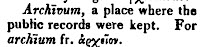
The word archives came from the Latin archivum, from the Greek archion (archive, record office; αρχείον)

From the same root
archival, archivist

In modern Greek
a) αρχείο: archives, file, record [archio]

OED

Η λέξη archives (αρχείο, -α) προήλθε από το λατινικό archivum, το οποίο αποτελεί μεταγραφή του ελληνικού αρχείον.

_________________________ Post 64. ___________